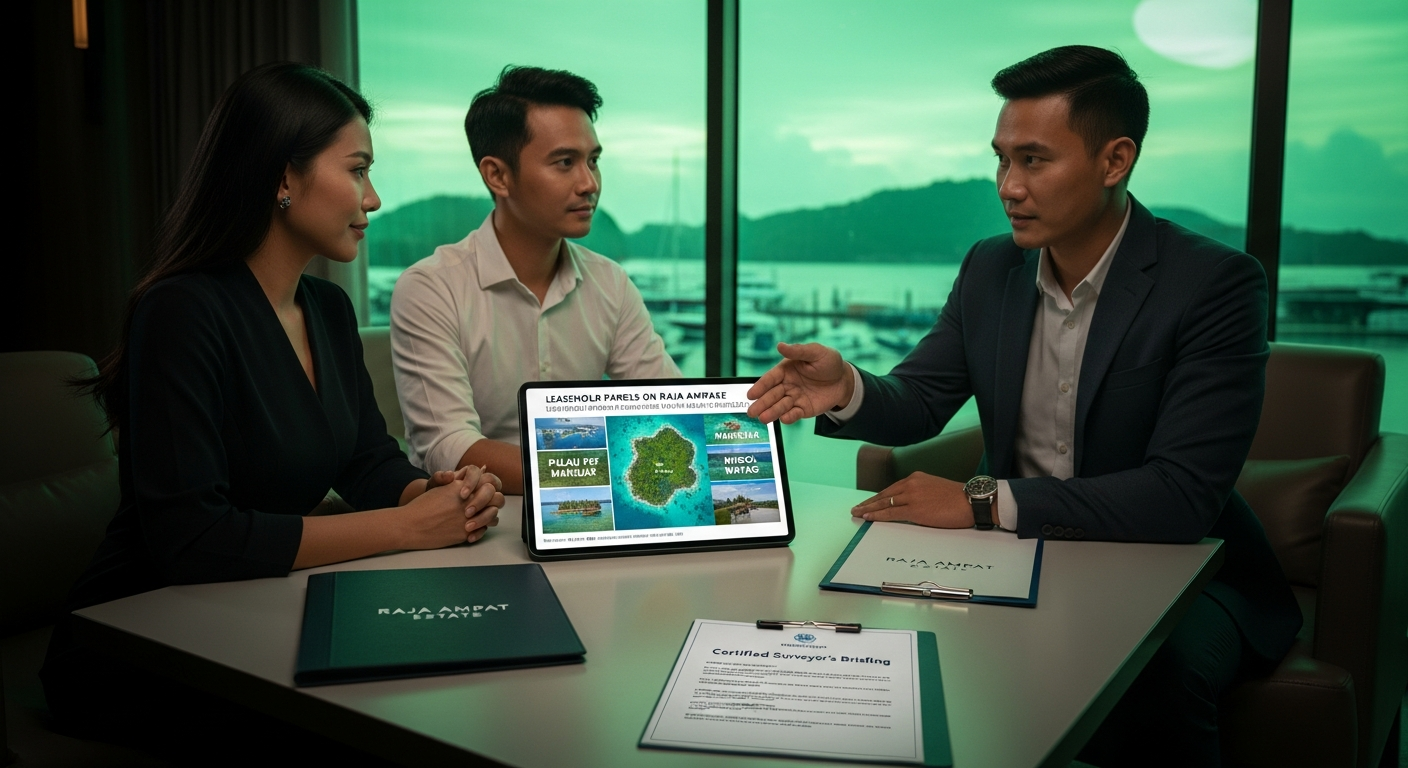
A Raja Ampat estate represents a strategic, long-term leasehold investment within West Papua, Indonesia’s 9.8 million-hectare Marine Protected Area. These exclusive properties offer UHNW investors and hospitality groups a rare opportunity to develop luxury eco-resorts and private island retreats amidst the Coral Triangle’s unparalleled biodiversity.
- Access premium beachfront and overwater villa sites across islands like Pulau Pef, Mansuar, and Misool.
- Leverage incoming visitor cap regulations for enhanced exclusivity and asset value appreciation.
- Benefit from direct air access via Sorong (SOQ) and established marine logistics to Waisai.
The Equatorial sun warms the air, a gentle breeze carries the scent of salt and ancient forests. Below, the Andaman Sea reveals a kaleidoscope of life, a living canvas where azure waters meet emerald islands. This is Raja Ampat, Indonesia, a destination now defining the pinnacle of luxury eco-investment.
The Raja Ampat Estate: A Strategic Investment Horizon
Acquiring a Raja Ampat estate positions an investor at the forefront of ultra-luxury eco-tourism and conservation-centric real estate. The archipelago, a sovereign territory within West Papua, Indonesia, spans over 9.8 million hectares of designated Marine Protected Area. This vast expanse, containing more than 1,500 islands, offers a finite collection of premium leasehold opportunities. UHNW investors recognize this scarcity as a primary driver of long-term asset appreciation.
Each potential estate site provides a canvas for bespoke development, from intimate overwater villas to expansive beachfront residences. The leasehold model, often structured for 80-year terms with renewal options, aligns with generational investment strategies, ensuring enduring value and control. Unlike many saturated luxury markets, Raja Ampat maintains a pristine character, largely due to its remote location and stringent conservation efforts overseen by the local government and international bodies like Conservation International. This commitment to ecological integrity directly enhances the investment profile, attracting a discerning clientele willing to pay a premium for genuine authenticity and environmental stewardship.
The appeal extends beyond individual investors; international hospitality groups, including operators of properties akin to Aman Resorts or Six Senses, routinely conduct site visits, assessing the potential for new flagship eco-resorts. These groups seek locations that offer both exclusivity and operational viability, criteria Raja Ampat consistently fulfills. The strategic advantage of early entry, particularly as regulatory frameworks like a proposed visitor cap are refined, cannot be overstated. This cap, designed to preserve the ecosystem, will elevate the value proposition of existing and future Raja Ampat estate developments, transforming exclusivity into a tangible, appreciating asset. Investors are not merely purchasing land; they are securing a stake in one of the planet’s most biodiverse and protected marine environments, with a clear trajectory for significant ROI.
Unrivaled Ecology and Global Conservation Significance
Raja Ampat stands as the undisputed epicenter of marine biodiversity, a designation formally recognized within the UNESCO Coral Triangle. This region alone harbors over 75% of the world’s known coral species and more than 1,500 fish species, making it an ecological marvel. Such biological richness is not merely a scientific curiosity; it forms the bedrock of Raja Ampat’s luxury tourism appeal, drawing an affluent demographic acutely aware of environmental impact and seeking authentic, high-value experiences. The area achieved its UNESCO Coral Triangle designation in 2007, solidifying its status as a global conservation priority.
The Indonesian government, in collaboration with NGOs, actively manages the 9.8 million-hectare Marine Protected Area, implementing policies designed to preserve its delicate balance. A crucial development on the horizon is the introduction of a visitor cap, a progressive measure aimed at preventing over-tourism and maintaining the pristine condition of the archipelago. While specific numbers are being finalized, this regulation will ensure controlled access, reinforcing Raja Ampat estate exclusivity. This proactive conservation approach directly safeguards investor interests, guaranteeing long-term viability and premium positioning. The value proposition for eco-resort entrepreneurs and dive lodge operators intensifies as scarcity becomes a regulated commodity.
Investing in Raja Ampat means aligning with a global movement towards sustainable luxury. Properties here are designed with minimal environmental footprint, often employing off-grid solar solutions and advanced waste management systems. This commitment resonates deeply with UHNW investors and the growing segment of conscious travelers who prioritize impact alongside indulgence. The transparent efforts to protect species like manta rays, whale sharks, and endemic birds of paradise (e.g., Wilson’s Bird-of-Paradise on Batanta Island) elevate the region beyond a mere destination to a living conservation project. This unique blend of ecological supremacy and responsible development provides a powerful narrative for any luxury brand or private portfolio seeking both financial yield and a meaningful legacy. For further information on the Coral Triangle initiative, refer to Wikipedia’s Coral Triangle page.
Premium Island Leaseholds: Your Private Archipelago Canvas
The archipelago offers an exclusive selection of premium island leaseholds, each presenting distinct characteristics for luxury development. Islands such as Pulau Pef, known for its pristine beaches and established eco-resort infrastructure, or Mansuar, strategically located near the vibrant Dampier Strait, represent prime opportunities. Misool, in the southern sector, offers dramatic limestone karsts and world-renowned dive sites, appealing to a specific segment of dive operators seeking to upgrade from liveaboard models to land-based luxury lodges. Wayag, while protected, serves as an iconic symbol of the region’s untouched beauty, influencing the design ethos of nearby developments.
These leaseholds provide the foundation for crafting bespoke luxury experiences: private island retreats, boutique eco-resorts, and state-of-the-art dive lodges. Imagine overwater villas above thriving coral gardens, or secluded beachfront estates offering unparalleled privacy. Typical 80-year lease terms provide substantial tenure for long-term planning and capital expenditure, securing investments for generations. Developers can leverage the natural topography, incorporating local materials and architectural styles that blend seamlessly with the environment, adhering to the principles of sustainable design that are paramount in this UNESCO-designated region. For instance, a 1-hectare beachfront plot on Mansuar Island offers direct access to prime snorkeling and diving within minutes, a critical factor for dive-centric resorts.
The strategic positioning of these islands near key marine areas, like the Dampier Strait, ensures consistent visitor flow and high occupancy rates for luxury accommodations. This strait, a marine biodiversity hotspot, attracts divers globally, with sites like Cape Kri boasting over 374 fish species in a single dive. For investors eyeing high ROI, the ability to offer direct access to such unparalleled natural assets is a significant competitive advantage. The opportunity to develop a private island leasehold within Raja Ampat represents more than just a real estate transaction; it is an acquisition of a unique ecological asset, offering both immediate luxury development potential and long-term appreciation within a globally significant conservation area. Consider the potential for a 15-villa boutique resort on Pulau Pef, generating an estimated annual gross revenue exceeding $2 million based on current market rates and