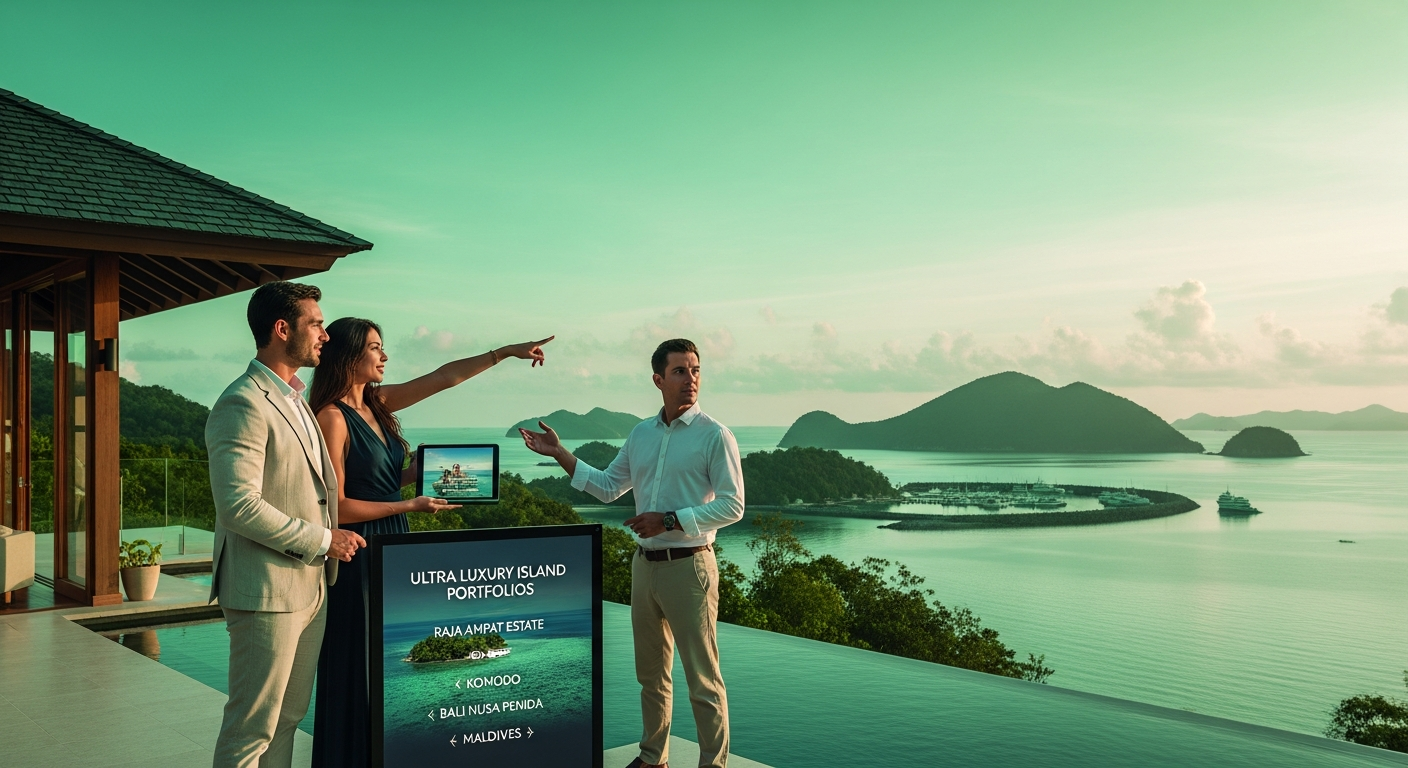
- Access to 9.8 million-hectare UNESCO Coral Triangle marine sanctuary.
- Strategic leasehold parcels for greenfield luxury resort and dive lodge development.
- Anticipated visitor caps ensure exclusivity and preserve long-term asset value.
The pursuit of ultimate exclusivity in luxury tourism investment converges on a singular frontier. Here, the world’s richest marine biodiversity meets an emerging market poised for discerning development. This guide dissects the strategic advantages and intrinsic value proposition of a Raja Ampat Estate investment, contrasting its unique profile against other established or developing luxury destinations globally.
The Pristine Frontier: Raja Ampat’s Ecological Integrity and Investment Value
Raja Ampat, a sprawling archipelago in West Papua, Indonesia, stands as the epicenter of marine biodiversity, a designation firmly rooted in its status as the heart of the Coral Triangle. This 9.8 million-hectare Marine Protected Area (MPA) encompasses over 1,500 islands and islets, hosting 75% of the world’s known coral species and more than 1,500 fish species. Such ecological distinction positions the Raja Ampat Estate not merely as a real estate acquisition, but as custodianship of a globally significant natural asset. The region’s visitor cap regulations, currently under discussion and expected to be implemented within the next 24-36 months, represent a deliberate strategy to preserve this pristine environment. This proactive measure ensures long-term exclusivity for high-yield, low-impact luxury tourism, a stark contrast to destinations like Bali, where mass tourism often strains infrastructure and dilutes premium experiences. Bali welcomed 6.3 million international visitors in 2019, while Raja Ampat’s annual visitor count hovers around 30,000, underscoring its nascent luxury market potential. Investment in a Raja Ampat Estate parcel aligns directly with a UHNW investor portfolio thesis focused on rare, protected assets with high barriers to entry. The UNESCO World Heritage status consideration further elevates the region’s profile, promising sustained international attention and a robust framework for conservation-aligned development. This ecological foundation translates directly into enduring value, appealing to family offices building an Indonesia island-portfolio thesis that prioritizes legacy assets over transient trends. For more on the Coral Triangle’s significance, refer to Wikipedia’s overview.
Strategic Access and Logistical Advantage: Raja Ampat Estate’s Connectivity
Accessibility often dictates the viability and appeal of a luxury destination. Raja Ampat’s primary gateway is Sorong’s Domine Eduard Osok Airport (SOQ), a facility undergoing significant upgrades to accommodate increasing traffic. Direct flights from major hubs like Jakarta and Denpasar (Bali) streamline travel, reducing transit times for international guests. From Sorong, a 90-minute fast ferry or private speedboat journey leads to Waisai, the capital of Raja Ampat and home to a modern marina facility. This established logistics chain provides a critical advantage for the development and operation of a high-end eco-resort or dive lodge. In comparison, many remote private island alternatives globally, such as some in Fiji or the Seychelles, demand multiple lengthy transfers, often involving private charters that add considerable cost and complexity. While these destinations offer exclusivity, their logistical hurdles can impact guest satisfaction and operational efficiency. The Raja Ampat Estate benefits from West Papua’s governmental focus on sustainable tourism infrastructure, including improved port facilities and enhanced inter-island connectivity. This regional support mitigates common challenges associated with remote development. For hospitality groups like Aman or Six Senses, site visits to potential greenfield locations in Raja Ampat reveal a strategic balance: sufficient remoteness for an exclusive experience, yet robust enough access to ensure operational viability and a seamless guest journey. The journey from Sorong to premium island leaseholds like Pulau Pef or Mansuar is typically 2-3 hours by private transfer, offering a journey that transitions from urban gateway to pristine marine sanctuary efficiently.
Leasehold Security and Development Potential: A Foundation for Luxury Eco-Resorts
The acquisition of premium island leaseholds within Raja Ampat represents a secure and strategic investment for luxury resort development. Indonesian land law permits long-term leasehold agreements, typically structured for 80 years with options for significant extensions, providing a stable framework for substantial capital investment. This contrasts with freehold scarcity in many established luxury markets, where outright ownership of prime beachfront or private island parcels is either prohibitively expensive or simply unavailable. The Raja Ampat Estate focuses on strategic parcels on islands such as Pulau Pef, Mansuar, and the fringes of Dampier Strait, known for their exceptional natural beauty, sheltered waters, and proximity to prime dive sites. These are greenfield opportunities, allowing for bespoke development that adheres to the highest standards of sustainable architecture and eco-conscious design. Eco-resort entrepreneurs seeking off-grid solar boutique sites find Raja Ampat particularly appealing. The region’s consistent equatorial sun exposure makes solar power a highly viable and sustainable energy solution, significantly reducing operational costs and carbon footprint compared to diesel generators prevalent in less progressive remote locations. Construction of an overwater villa or a boutique dive lodge here allows for integration of local materials and traditional Papuan craftsmanship, creating an authentic sense of place that resonates with the discerning UHNW traveler. The potential for a significant Return on Investment (ROI) is underpinned by the scarcity of such pristine, developable land within a globally renowned protected area. For an overview of Indonesia’s tourism landscape, visit Indonesia.travel.
Market Maturity and ROI Projections: A Contrasting View
The Raja Ampat luxury tourism market is in its nascent stage, presenting a unique investment window compared to more mature destinations. While the Maldives boasts a well-established luxury resort sector with high entry costs and intense competition, Raja Ampat offers significant greenfield potential with higher yield projections for early movers. The average daily rate (ADR) for luxury eco-resorts in Raja Ampat currently ranges from $800 to $2,500 per night, reflecting the exclusivity and high-value experience. This figure is competitive with top-tier properties in other Southeast Asian luxury destinations but comes with the added benefit of entering a market with substantial growth headroom. The impending visitor cap will act as a powerful demand driver, ensuring that a limited supply of high-quality accommodations will command premium pricing and maintain high occupancy rates. This regulatory foresight creates an investment environment distinct from areas like Phuket or Lombok, where market saturation can lead to price compression. UHNW investors and family offices looking at long-term asset appreciation will find the Raja Ampat Estate’s positioning compelling. The region’s reputation as the “Last Frontier” for marine conservation attracts a specific demographic of high-net-worth individuals who prioritize unique, authentic, and environmentally responsible travel experiences. This niche market is less susceptible to economic fluctuations and often willing to pay a premium for unparalleled access to pristine nature. The average construction cost for a luxury overwater villa in Raja Ampat might range from $1.5 million to $3 million, offering a compelling cost-to-value ratio given the potential revenue streams and asset appreciation.
Beyond the Horizon: The Raja Ampat Estate as a Legacy Asset
Investing in a Raja Ampat Estate parcel transcends traditional real estate acquisition; it represents an opportunity to acquire a legacy asset within a globally significant ecological treasure. For returning Indonesian diaspora, this signifies more than just a portfolio addition; it is an investment in West Papua’s future, a contribution to sustainable development, and a connection to national heritage. Family offices often seek assets that align with broader philanthropic or impact investment goals, and Raja Ampat’s commitment to marine conservation and community empowerment fits this thesis perfectly. The development of a luxury eco-resort here can directly support local communities through employment, education, and sustainable sourcing initiatives, creating a positive social return alongside financial yields. The brand potential for a luxury property in Raja Ampat is immense. The name itself evokes images of untouched beauty and unparalleled biodiversity, offering a powerful narrative for an exclusive hospitality brand. International hospitality groups conducting site visits recognize this intrinsic brand value. Unlike generic beachfront properties in more developed regions, a Raja Ampat Estate property offers an identity rooted in true wilderness and pioneering luxury. The Misool region, for example, is renowned for its vibrant soft corals and pelagic encounters, making it a prime location for a dive lodge that caters to elite enthusiasts. The investment horizon for such a legacy asset is long-term, typically 15-20 years for full maturation and significant capital appreciation, offering stability and prestige within a diversified global portfolio. For further context on marine conservation, consider resources from UNESCO Marine World Heritage.
The decision to invest in a Raja Ampat Estate property marks a strategic move into a market defined by unparalleled ecological value, robust growth potential, and discerning exclusivity. We invite UHNW investors, family offices, and international hospitality groups to explore the specific leasehold opportunities available. Connect with us to discover how a Raja Ampat Estate acquisition can anchor your portfolio in the future of luxury eco-tourism. Visit our homepage for more details or contact our advisory team directly to discuss bespoke investment solutions.